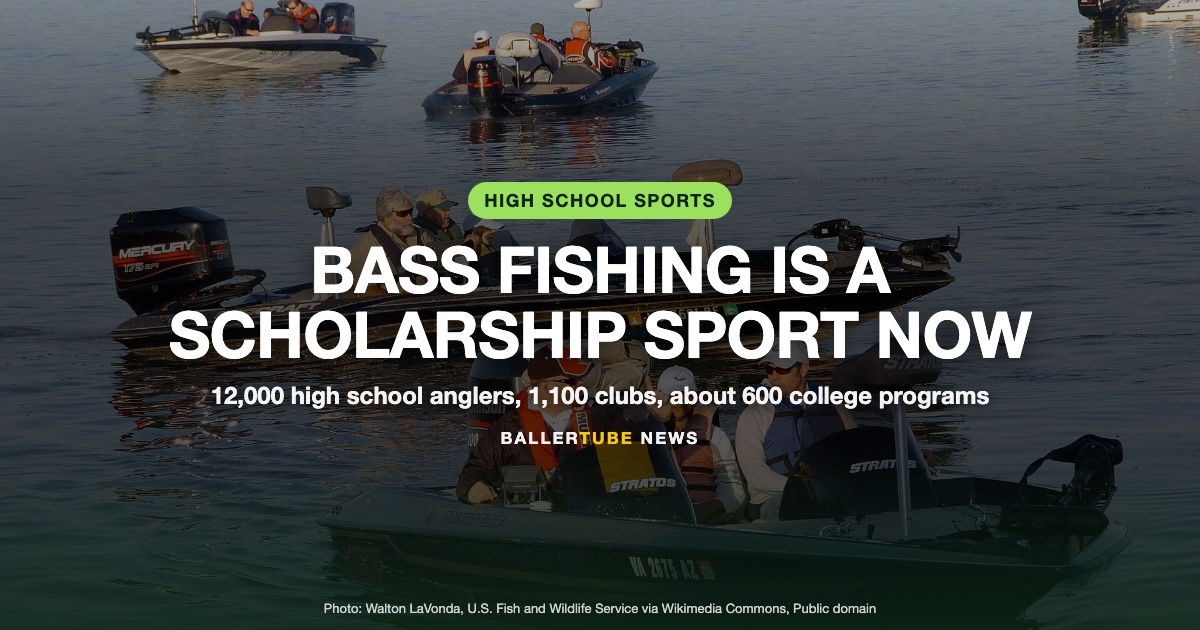
The fastest-growing recruiting pipeline in high school sports might not have a ball in it. Competitive bass fishing now counts about 12,000 anglers in roughly 1,100 high school and youth clubs across 35 states, up from about 600 clubs and 6,000 anglers in a dozen states a decade ago, according to figures from B.A.S.S. Nation reported by The New York Times this month.
Roughly 600 colleges have some kind of fishing program, double the number from ten years ago, and some of them hand out scholarships. For a family with a boat and a kid who would rather be on the water at 6 a.m. than in a gym, that changes the math.
Which States Sanction High School Bass Fishing
Nine state athletic associations now recognize bass fishing as a championship sport: Georgia, Illinois, Kentucky, Louisiana, Michigan, Mississippi, Missouri, New Hampshire and Vermont, according to the Congressional Sportsmen's Foundation. Illinois, the earliest adopter, grew participating schools by 60 percent between 2009 and 2023. The requirements are simple: a valid fishing license, Student Angler Federation membership for liability coverage, and an adult captain in the boat at all times.
Georgia is the newest success story. The GHSA added bass fishing in 2021, and the average field has grown from 90.8 boats per tournament in year one to 153.5 this past season, per the Atlanta Journal-Constitution. The 2026 state championship at Lake Sinclair drew 113 boats and 222 anglers. Jefferson's Benjamin Wilson and Jacob Janning won it with a five-fish bag of 20 pounds, 5 ounces. The sport is co-ed, has no school-size classifications, and teams practice on their own schedule at whatever lake they can reach.
Florida is not on the sanctioned list. Florida anglers compete through Florida B.A.S.S. Nation's high school division and Student Angler Federation events instead, and the state federation funds three to six unrestricted scholarships a year worth $500 to $2,500 each, per its scholarship page.
How the Bassmaster High School Combine Works
Recruiting has its own showcase. The Bassmaster High School Combine presented by Skeeter brings 100 high school anglers to Wheeler Lake in Decatur, Alabama, each September to perform timed skills challenges in front of coaches from 25 college programs. Only colleges that offer fishing scholarships are invited, and after day one the schools pick anglers for a "second look." Registration costs $750 and includes two nights of lodging and four meals, according to Bassmaster.
B.A.S.S. tournament manager Glenn Cale called the Combine "one of the most important events we offer for young anglers" looking to fish in college.
What High School Bass Fishing Costs Families
This is where the sport looks a lot like travel baseball with a trailer hitch. The Times reported that new bass boats can run $100,000, digital fish finders start around $2,000, and rods cost several hundred dollars apiece. Most schools will not insure anglers or boats for liability reasons, so parents often captain the boat themselves and cover travel, lodging and entry fees. One official in the report described the top youth levels as "travel league fishing."
The AJC found the same pattern in Georgia. Bass boats cost thousands of dollars, most schools cannot help buy one, and families typically cover gear and transportation. Once a program has boats, though, coaches say it is one of the cheapest sports to run.
Why It Matters for Athletes Looking for a Path
Bass fishing is one of several non-traditional sports (flag football and esports are others) that colleges are using to recruit students and that high schools are adding to keep kids engaged. With scholarship money attached and a formal combine, it now has the structure of a recruiting sport. Two anglers from Oconee County, Georgia, qualified for a national tournament off a fourth-place state finish this spring, which is exactly the kind of exposure ladder that football and basketball families know well.
The next national event on the calendar is the 2027 Bassmaster High School series, with schedules posted on Bassmaster's site. Follow BallerTube's coverage of emerging and youth sports, and tag your program's anglers on BallerTube's bass fishing page.